|
|
| Line 315: |
Line 315: |
| <td>Assets (including routes and sessions) that you have created yourself, or cloned and modified from other assets, are the ones most likely to require this recovery action if you have intentionally or otherwise deleted them. As always the best preventative measure is to perform regular backups of your work using '''.cdp''' files. See the '''Trainz Wiki Page [[image:WikiLink.PNG|link=]] [[How to Manage Backups|How to Manage Backups]]''' for the details. | | <td>Assets (including routes and sessions) that you have created yourself, or cloned and modified from other assets, are the ones most likely to require this recovery action if you have intentionally or otherwise deleted them. As always the best preventative measure is to perform regular backups of your work using '''.cdp''' files. See the '''Trainz Wiki Page [[image:WikiLink.PNG|link=]] [[How to Manage Backups|How to Manage Backups]]''' for the details. |
| <br> | | <br> |
| Routes and sessions that you are editing in '''Surveyor''' will be automatically backed up a set number of times each day. If you need to restore a route and/or session to an earlier version then the method described here can also be used but it is specifically covered in more detail in the '''Trainz Wiki Page [[image:WikiLink.PNG|link=]] [[How to Manage Backups|How to Manage Backups]]'''</td> | | Routes and sessions that you are editing in '''Surveyor''' will be automatically backed up a set number of times each day for upto 7 days. If you need to restore a route and/or session to an earlier version then the method described here can also be used but it is specifically covered in more detail in the '''Trainz Wiki Page [[image:WikiLink.PNG|link=]] [[How to Manage Backups|How to Manage Backups]]'''</td> |
| </tr> | | </tr> |
| </table> | | </table> |
| Line 714: |
Line 714: |
| ---- | | ---- |
| ---- | | ---- |
| | |
| ='''Trainz Wiki'''= | | ='''Trainz Wiki'''= |
| <table width=1000> | | <table width=1000> |
Revision as of 22:36, 29 April 2025
| The information in this Wiki Page applies to TRS19, Trainz Plus and TRS22 and describes the methods that can be used to restore assets deleted by Content Manager and the Content Store. |
|
|
 |
Notes:
|
|
|
 |
Deleted assets that were originally Installed from DLS can be easily restored by installing them again from the DLS |
| Deleted assets that were installed from the DLS are the easiest of all to restore. Simply use Content Manager to locate the assets and download them again. |
| Steps: To reinstall a deleted DLS asset:- |
 |
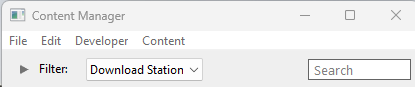
In Content Manager select the Download Station filter from the Filter drop down menu |
 |
 |
Optional: Type part of the asset name in the Search box to narrow the search |
 |
Right Click on the asset name in the displayed list and select the Download option |
|
 |
However, if for some reason you are unable to access the DLS and the deletion occurred during the last 7 days, then the assets can still be recovered from the automatic backups that Content Manager creates when assets are deleted. These backups are only held for 7 days. See  Restore Assets from the Automatic Backup for the details. |
|
|
Deleted assets that were installed from .cdp files can be easily restored by reinstalling them from the same .cdp files |
|
Payware and Packaged assets that were installed from a DLC package can be restored by reinstalling the same DLC Package |
|
If the identical Packaged asset is also on the DLS then it can be restored from there |
|
Assets deleted using Content Manager within the last 7 Days are stored in the Backup Folder for the date they were deleted |
|
Deleted assets are stored using their <kuid> code(s). Knowing their <kuid> code(s) is very helpful but is not vital |
Assets (including routes and sessions) that you have created yourself, or cloned and modified from other assets, are the ones most likely to require this recovery action if you have intentionally or otherwise deleted them. As always the best preventative measure is to perform regular backups of your work using .cdp files. See the Trainz Wiki Page  How to Manage Backups for the details.
Routes and sessions that you are editing in Surveyor will be automatically backed up a set number of times each day for upto 7 days. If you need to restore a route and/or session to an earlier version then the method described here can also be used but it is specifically covered in more detail in the Trainz Wiki Page How to Manage Backups |
|
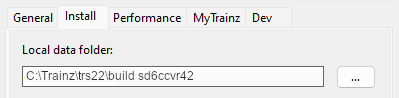
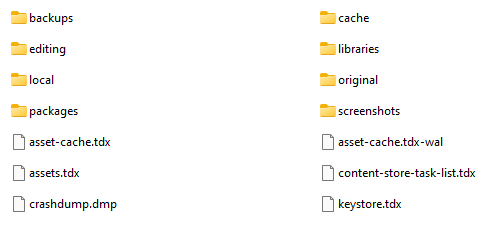
The Backups folder where deleted assets are held is a subfolder of your Local User Data Folder |
|
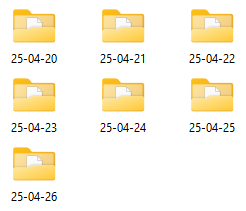
The backups of deleted assets are kept in folders identified by the date (during the last 7 days) when they were deleted |
|
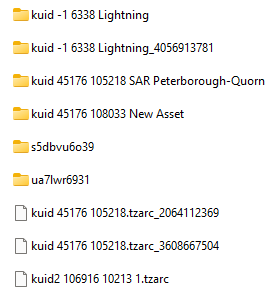
The backups are stored as .tzarc files |
| Steps: To Restore Assets from their Backup Files:- |
|
In File Explorer Double Left Click on the Backups folder to open it up. Depending on how often you have used Surveyor during the last 7 days, and depending on your File Explorer display settings, you may see something like this...
|
|
Double Left Click on the folder for the day when the asset or assets were deleted. This will display all the backup files and folders created that day.
|
|
Select ( Left Click ) on the asset backup file to be restored. If more than one file has to be restored then use Shift + Left Click or Ctrl + Left Click to select them all |
 |
Right Click on one of the selected files and select the option Copy to copy them to your OS clipboard. The original file backups will remain in the folder until the 7 days have passed when they will be deleted |
|
|
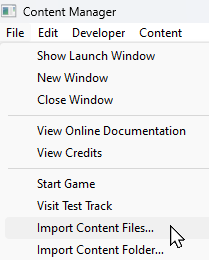
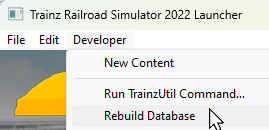
The backup files of the deleted assets have to be copied into the Editing folder and a DBR perfomed |
|
Use Content Manager to check that the assets have been restored |
| Steps: To Check the Status of the Restored Assets:- |
|
Open Content Manager and select the Filter Open for Editing |
|
If any of the assets are listed then select and Submit them |
|
Select the Filter Installed and sort the list on the column Modification Date into descending date order ( Left Click once or twice on the column heading) |
|
The restored assets should appear at the top of the list |
|
Trainz Wiki
 |
More Tutorials and Guides to Using Trainz
|
|
 |
Related Links
|
|
This page was created by Trainz user pware in April 2025 and was last updated as shown below.