Automatic Backups vs Manual Backups
| |
Automatic Backups |
Manual Backups |
Pros
 |
- set and forget - no need to remember to perform the backups
- backups are stored in a set location
- automatic restore after a crash
|
- you control where the backups are stored and for how long
- you control the backup file names
- any assets can be backed up, not just routes and sessions
|
Cons
 |
- identifying the exact backup file to restore may not be easy
- only routes and sessions can be backed up
- last 7 days of backups only are kept
|
- you have to remember to perform the backup
- you have to remember where you stored the backups
- manual restore after a crash
|
|
Automatic Backups
Creating Automatic Backups
This is a Set and Forget operation. You simply tell Trainz how many backups you want created each day and the program takes care of the rest.
|
Steps: To Set the Automatic Backups:-
 |
select Trainz Settings from the Launcher and then click the Dev tab.
 |
 |
One data entry box in this tab will be named Daily backups to keep and it will have a default value of 7. Set it to the number of backups you want each day. |
| Warning: |
 |
If you set 0 daily backups then there will be no option to restore your route/session to the latest automatic backup after a crash |
|
|
Only the last 7 days of backups are kept and this number cannot be changed.
Restoring Automatic Backups
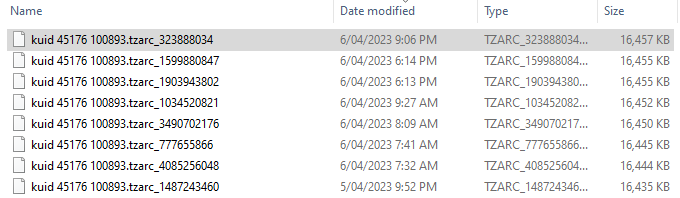
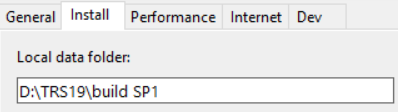
| The automatic backups are stored in a backup folder in your Trainz local data folder. The location of this folder is held in your Launcher - Trainz Settings - Install tab. |
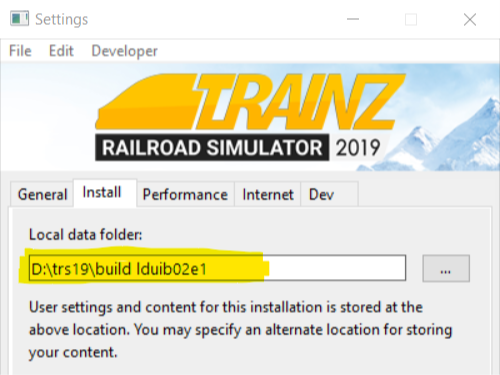
Example Only: Your Local Data Folder will be different. |
Steps: To Find the Automatic Backups Folder:-
|
Highlight the Local Data Folder address and copy to your OS clipboard - press Ctrl C |
|
Open Windows Explorer and paste ( Ctrl V ) the address into the Address Bar
|
|
|
|
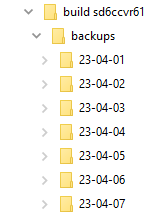
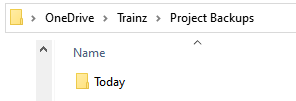
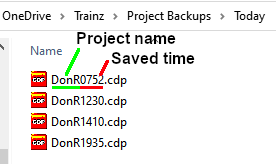
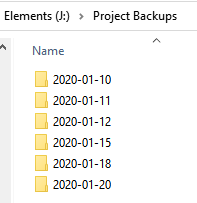
This folder can also found using Windows Explorer by following a similar folder path as shown below.

Where idname is the first 5 characters of your Windows logon name and random will be a random sequence of letters and numbers identifying the Trainz Build Number. |
 |
Notes:
|
|
|
|
WARNING:
The old method of dragging and dropping the backup folder into Content Manager to restore it does not work. Instead the following method is recommended.
|
|
More details, including tips on troubleshooting, can be found in the Trainz Knowledge Base at  Restoring Backups |
Creating Manual Backups
|
Steps: To Create a Manual Backup:-
|
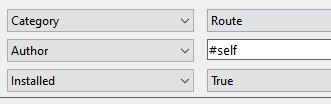
open Content Manager and use a search filter to identify the assets to be backed up. Some examples:-
|
|
highlight the asset or assets (more than one asset can be included in each backup file) |
 |
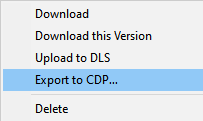
right mouse click on one of the highlighted assets and select Export to CDP
 |
 |
select a drive, folder and enter a backup filename |
|
Restoring Manual Backups
|
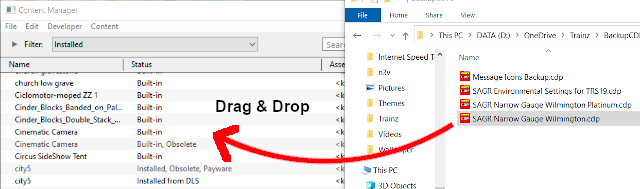
Steps: To Restore a Manual Backup:-
|
Backup Plan Basics
Backing Up and Restoring Picklists
Picklists cannot be backed up manually using .CDP files. They must be exported as text files.
 |
Detailed instructions on backing up and restoring Picklists as text files can be found on the Trainz Wiki Page at:-
|
Backing Up All Your User Content
| You can make a backup copy of all your installed content (buildings, tracks, rolling stock, trees, routes, sessions, etc, etc). Everything you have downloaded and installed from the DLS and other web sites, all the built-in content and all your DLC packages. Also included will be all the screenshots you have captured and your automatic backups. In short, everything but the program "executables" and utilities that form the Trainz program itself.
All of this data is stored in your Local Data Folder.
|
| Warning: |
|
Be aware that this could be a very large quantity of data that could take a lot of time and space to backup |
| |
 |
 |
|
|
Trainz Wiki
 |
More Tutorials and Guides to Using Trainz
|
|
|
Related Links
|
|
This page was created by Trainz user pware in January 2020 and was last updated as shown below.